
Footnotes to 2.5 years
Success for each technology was defined as “100,000 people have taken it” by February 2nd, 2029. That’s because new technologies don’t matter unless people actually use and benefit from them. The exception was row #9 – programmable drugs before a future pandemic – because I hope 0 people ever have to use those; they’re a backup.
(If you don't know what I'm talking about, start here.)
The green one
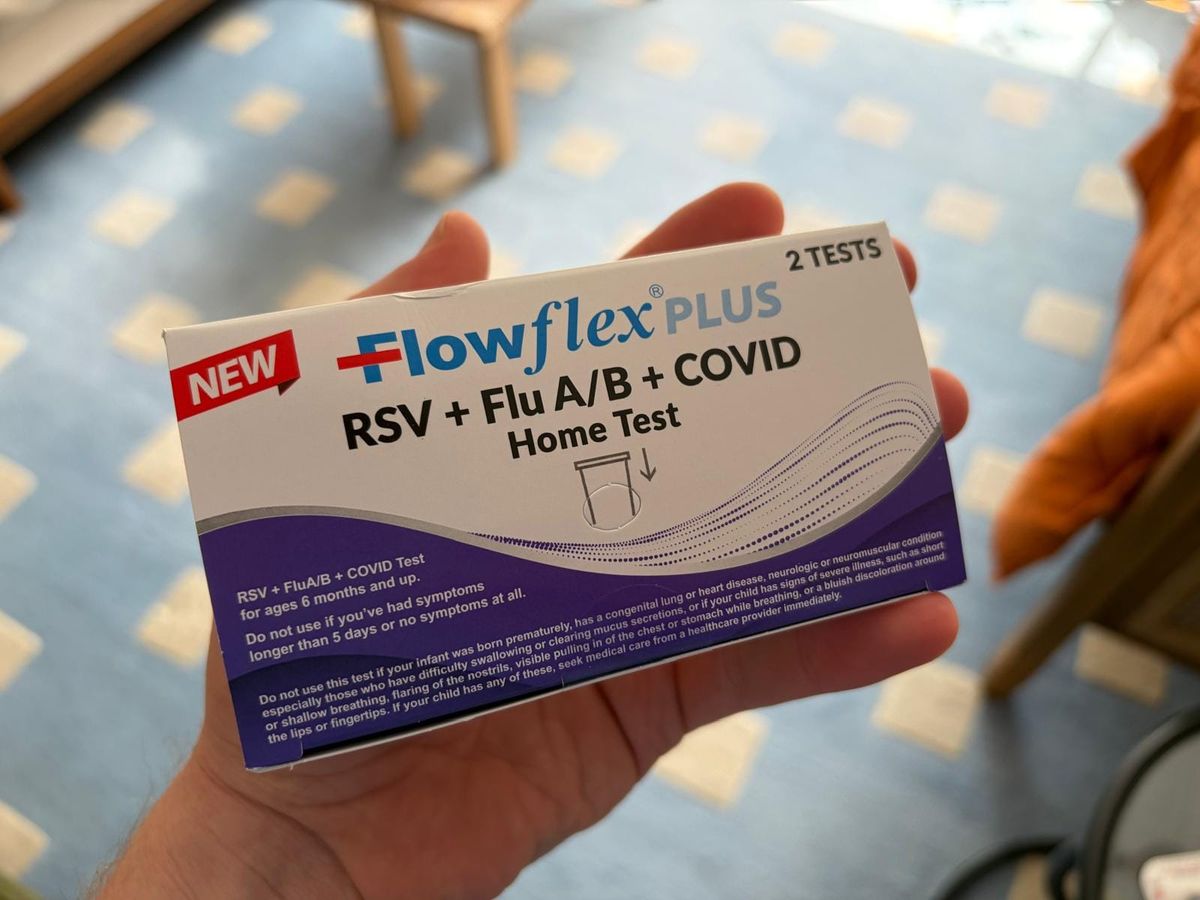
8. Test that tells you why you're sick. 🏁🏁🏁. We (probably) did it, folks. Tests like the Flowflex respiratory panel pictured above are now available. Three cheers for the NIH, which ran a COVID-era program on diagnostic R&D called RADx, including a segment called the Independent Test Assessment Program (ITAP). ITAP launched with $70M in funding, and helped manufacturers validate multiplex diagnostics people could use at home. There were many successes from that program, most of which were COVID + flu A/B, helping tread the path for the FDA authorisation of at-home multiplex tests – and now we're there with RSV in the mix! I don't have accurate sales and usage statistics to confirm, but I bet several tests have crossed the 100,000 threshold of use over the last 2.5 years. The Flowflex test meets the >=3 pathogen criterion and is nationally available in CVS and Walgreens – so, I’m marking the cell green.
In the last 2.5 years, the company Visby also received FDA authorisation for an at-home molecular test for chlamydia + gonorrhea + trichomoniasis. I'm not sure on sales figures there either; perhaps they're over 100,000 by now, perhaps not.
(I defined success as: “a multiplex diagnostic for at least 3 pathogens (i.e. flu + COVID does not count), available over the counter for use at home. Either a respiratory panel (e.g. flu + COVID + strep throat) or a fever panel (e.g. malaria + dengue + typhoid) would count. An at-home multiplex STI panel would be great (e.g. chlamydia + gonorrhea + syphilis), so I’d count that as a win too even though it doesn’t as intuitively meet the “tell you why you’re sick” phrasing.”)
Now, to my credit, in 2024 I wrote “I don’t know” in the cell predicting whether such a test would be available in 5 years, rather than that one wouldn’t. You might be wondering: why did the author of such a definitively titled blog post about 10 technologies that won’t exist by 2029 include 1 he didn’t know about? I wish I could tell you, but some answers are lost to the winds of time. At least you’ll be glad to hear that the author was not only wrong in his prediction, but was probably-wrong at the time of writing according to the global definition of success outlined, due to American-tinted glasses. A reader from Europe emailed me on February 10th, 2024, making me aware of 4-way tests available over-the-counter in some places in Europe. Looks like Australia had similar too, and perhaps the UK. I don’t know whether those tests had sold over 100,000 units by the time I wrote the first post, but some probably had – I didn’t even know they existed, so I was wrong from the start. (Thanks, Franz.)
The red ones
Redness means the technology still isn’t available. That colourful verdict occludes much work over the last 2.5 years, and often some hard won progress, all discussed below. I’m holding the bar firm on the definition of success, though, and success on a timeline. We should all feel time pressure on behalf of patients.
- TB vaccines for adults are, despite twists along the way, still on the same track that I wrote about 2.5 years ago. Three main updates:
- The trial that I said “may have a positive readout before 2029” didn’t meet its primary endpoint, for either of the two vaccine candidates. Darn.
- The big M72/AS01E phase 3 trial is fully enrolled, and happily now has a manufacturer lined up in the Serum Institute – though I don’t love the sentence from that press release saying “GSK, the original developer of the vaccine, will supply the AS01E adjuvant”. GSK uses that family of adjuvant for its malaria vaccine already that sells for ~$10 per dose, as well as the shingles vaccine it sells in rich countries for ~$200 per dose, the latter of which does not leave me feeling confident about supply for TB. In an ambitious rollout, hundreds of millions of TB vaccine doses would be needed, rapidly.
- Biofabri, with support from Coefficient Giving and the Gates Foundation via IAVI, has launched an efficacy trial of the MTBVAC candidate. Biofabri has already struck deals with global manufacturers should the vaccine work, and they’re testing a one-dose regimen rather than M72’s two doses. Most drug candidates don’t end up working, of course, so I shouldn’t get my hopes up, but… tantalising, tantalising…
This remains true, from my original post: “I still can’t see a world where 100,000 people have received M72 by February 2nd 2029, even in my optimistic moods, but I hope I’m wrong.” I can see it being true later in 2029, or in 2030. And February 2029 is not impossible. “Probably not” still feels about right.
- Strep A vaccine R&D has had a recent jolt from Coefficient Giving launching a 5 year fund with $140M of $200M committed so far. More scientists and companies should consider getting into strep A now it’s possible to get funded: the field is wide open, progress is possible, and indeed learning might be quick given new human challenge models. Vaxcyte started a phase 1 with VAX-A1 a few months ago; the new era begins. That said, no chance of a vaccine approval by February 2029; red.
- Malaria monoclonal antibodies had success with L9LS in 6 to 10 year olds, then under-5s, with an ongoing phase 3 to protect children from future malaria infections after they’re treated for severe anemia or severe malaria – though it may not be potent enough for a broad rollout. Promise from CIS43LS in adults, and MAM01 is sneaking up behind. To my knowledge there are no rollout plans to a broad population in the next 2.5 years – in particular preventively for kids in West Africa, to cover the rainy season.
- Bugs that stop malaria (including rurally) have had a major setback in Burkina Faso, though some progress in Tanzania, São Tomé and Príncipe, and Equatorial Guinea. Small field releases are possible in those three countries in the next 2.5 years, though depending on the release contemplated, it would take a year or two to saturate the local mosquito population, and would likely not yet reach the criterion of at least 100,000 people benefited since the most likely releases are on low-population islands. Depending on local decisions in Equatorial Guinea, Bioko could meet that condition (population 300,000), but I doubt there'd be spread throughout a mosquito population by February 2029.
- Hep C vaccines have had some wonderful technical breakthroughs due to AI-assisted design, coupled with slow progress getting into the clinic. Happily, one study just started enrolling in Oxford as the first step towards human challenge, which is truly novel and great to see. That means we're on the right track, but I’ve left the cells red because I can’t imagine an approval by February 2029. The way it could work, with speed in mind, is: multi-arm challenge trials of the leading few vaccine candidates, safety data from a broader group to catch rarer events, and conditional approvals for any candidates that show efficacy and safety. That path recognises that, for people affected by hepatitis C, field trials are exceptionally difficult to conduct to determine efficacy, and that safe vaccines with immunogenicity + challenge data as an efficacy signal are better than no vaccines. (However, the broader safety cohort is the most important part of that combination, as reminded by the new chikungunya vaccine that took a related approach of immunogenicity-only for efficacy data given the difficulty of field trials.)
- Stroke reducing drug that most patients can take is the area where I’m making the most debatable judgment call on cell colouring. I didn’t specify cleanly enough what success counts as, in particular what “most patients can take” really means. So, let me share more of what I was visualising, if not exact criteria, before getting into specifics on drug candidates and progress.
As the table says, stroke kills 6 million [probably more!] people per year. That’s 1 out of every 10 deaths on planet earth, without mentioning the debilitation that can take place over many years of recovery for the 85-90% of people who survive a stroke. The surgery I mentioned in the original post is a wonder, but it’s not going to reach enough of those 6 million people any time soon. I am looking for something easier, likely pharmaceutical, which substantially reduces the chance of death or the chance of disability afterwards. That means a treatment most people with an ischemic stroke (or a hemorrhagic stroke – in which case, different drug) can get administered in the first few hours, ideally in the ambulance itself after a brain scan, to halt brain damage.
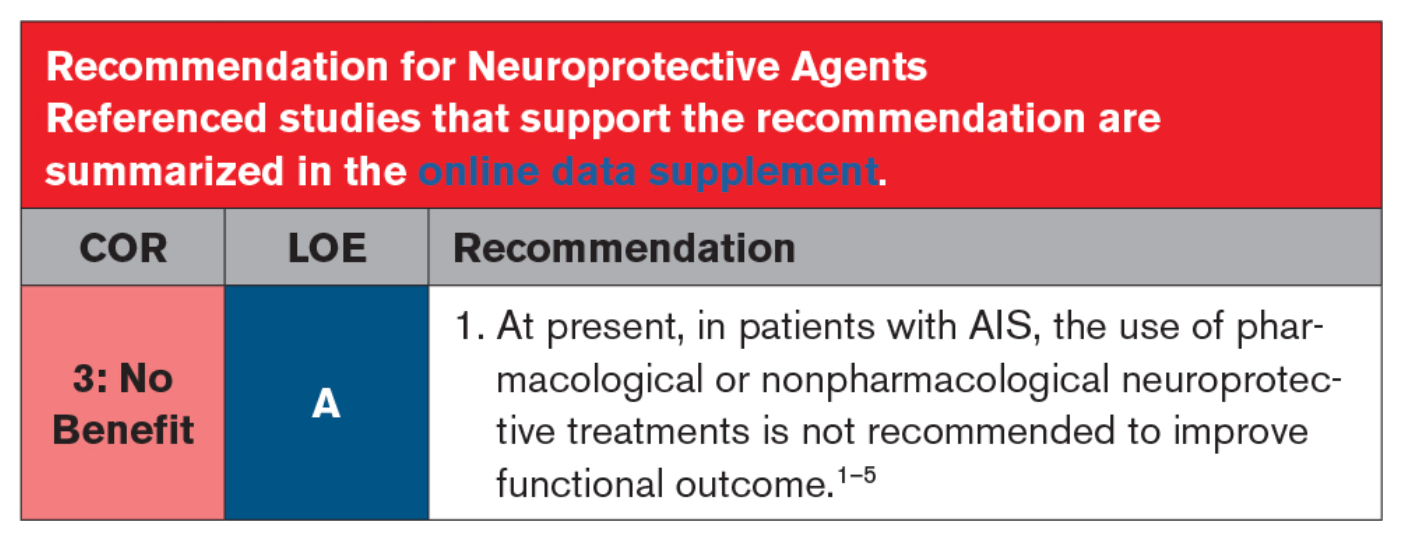
Progress in the last 2.5 years: there have been some trials in Chinese hospitals with ~1,000 people that aren’t enough to turn the cell green today, but possibly will be by February 2029 (🤞), which is why I’ve marked that latter column yellow. Phase 3 trials of a repurposed oral antibiotic minocycline and intravenous loberamisal both improved the chance that ischemic stroke patients recovered without significant disability by 90 days – and since most strokes are ischemic strokes, that could end up meeting the “most patients can take” it framing if the results hold up. Then I didn't call out butylphthalide or edaravone-dexborneol in the original post, but it would be great to see the evidence for those shored up outside of China too. (AHA 2026 guidelines: “Combination therapy with sublingual edaravone and dexborneol showed efficacy in a phase 3 trial in mild stroke patients from 1 country, but generalizability to other populations is not known.”)
- Hep B treatments had a big success in the last 2.5 years. Last time, I wrote: “there are many “functional cures” in the clinical pipeline (Table 1), some of which will hopefully prove even more useful.” Happily, we have seen the first phase 3 success of one such functional cure: bepirovirsen. Around 20% people in the trial population reached functional cure, with low-or-no viral DNA or antigens detected 24 weeks after they finished treatment, and bepirovirsen is expected to be approved in October 2026 in the U.S. (Japan's ahead of us), which is wonderful news for many people with chronic hep B. The cell in the table is still red because I want to hold the line that we can do much better, from my original post: “let’s get rid of the damn thing”. Towards that goal, we are not close. Though there are glimmers…
- I already discussed technology #8 in the green section above so I'm using this slot to advertise two jobs instead. 2026 is different to 2024 for me professionally, in that I now work at the OpenAI Foundation. This remains a personal blog, and the table of ten unmade technologies is not our roadmap. There are several rows we're not working on, and several health technologies not listed that we are. That said, if you resonate with the challenges in the table, and with these footnote posts, you might like it here. Those two jobs are to work on High-Burden Diseases. At the time of publishing, we are hiring for many other roles too, some of which will start coming down in ~a week – so, I encourage applying now. We have a commitment to science and health funding that sounds impossibly large, and we intend to meet it.
- Programmable drugs ahead of future pandemics. Inhalable siRNA, baby. Perhaps other platforms too (or, instead). I’m hopeful for Locked Nucleic Acids, perhaps something with bispecifics, perhaps something host-directed that counts as “broad spectrum” against many viruses even if it’s not “programmable” per se… We’re going to get there. I hope. One day. Not by February 2029. Unless…
- Congenital syphilis has been rising in many places and we're nowhere near an approved vaccine, though there have been some cool technical breakthroughs along the way.
If I were to write the original list again today
I’d have written the multiplex diagnostic row differently, and wouldn’t have elevated hep C and syphilis vaccines vs some other missing technologies that didn’t make the cut. (Nominations welcome.) I have nothing against vaccines – perhaps I’d use one of the free slots to add in neoantigen cancer vaccines, which hold more promise than I’d realised in 2024 – but sometimes prompting the immune system in the right way is hard, and you can solve the same problem in other ways:
- Lenacapavir showed that long-acting preventive drugs have proven a better approach than vaccines for HIV so far – there’s now a working, almost-100% effective product people can use, and no vaccine. There is some ongoing work in malaria and TB on that front I'm aware of, and there should be more. Perhaps there’s a path ahead for hepatitis C, too – and, indeed, for strep A as a backup in case vaccines stall, since the current preventive monthly shots of penicillin for teenagers at risk of rheumatic fever sound painful as well as hard to deliver consistently. (Syphilis is easy enough to cure with long-acting penicillin already, so further improvements are a lower priority to develop.)
- While vaccines would still be great to have for hepatitis C and syphilis, the table is making implicit prioritisations by including some technologies and leaving others absent. I would lean more on what I wrote last time, to make room for other priorities: “ambitious screen-and-treat programs [for hep C] are more important than developing a vaccine” and “The top priority today [for syphilis] should be to provide tests and treatment for women in their first antenatal care visit”. Just to be clear though... I still want to see hep C and syphilis vaccines in the 2030s, and am emotionally invested in both.
Other things I wouldn’t change per se, but are limitations of the format:
- Some things that would benefit people’s health the most act across multiple diseases. For example, eliminating lead would prevent millions of deaths from cardiovascular disease, as well as improve kids’ cognitive development, and that’s more about policy change than drug development.
- Access to decent quality medical advice in your pocket was something much less present in 2024 than in 2026, due to rapid technological progress in language models. That's another technology that cuts across diseases. I expect clinical decision support for doctors and other health care workers to be an area of significant improvement across diseases in 2027 and 2028.
- There are many diseases that cause immense ill-health and suffering, but fewer deaths than, e.g., tuberculosis: depression, back pain, chronic fatigue. It is harder to put those in a resonantly quantitative table, so for simplicity of the message of the original post I stuck with high mortality diseases. But there are breakthroughs needed in many high morbidity diseases, too.
Would I write this part, again? “With an extra $10 billion over 10 years I’m pretty sure we’d get to 5 or 6 of the 10 on the list, and millions of unnecessary deaths would be prevented.” Yes, I would. In these next 10 years, it is time to find out whether that is true.
Footnotes to footnotes
[1] The mathematicians among you may have spotted it is actually 2.6 years since February 2nd, 2024. I didn’t get around to writing this update in August; for one, I was busy hiking. I am writing these footnotes as if we’re at the exact halfway mark of 5 years, for posterity’s sake. To achieve that, I have tried not to include updates that came after August 2nd, 2026, other than the "Japan's ahead of us" press release from August 24th I couldn't resist. And, I suppose, the OpenAI Foundation hiring mention, which is real-time. If another one snuck through I didn’t spot, please email me.
[2] So, are multiplex diagnostics a solved problem now that that cell is green? Are we actually 🏁? We are better off for these products being available (indeed I am personally better off, and grateful), but the broader answer is More Would Help. There are many contexts and many diseases where high quality diagnostics are not available or accessible, often for reasons to do with insufficient financial reimbursement from health systems relative to the health benefit they'd provide. These known market failures in diagnostics mean you often need R&D funding beyond what private capital markets provide – RADx and that $70M ITAP program are great examples. Diagnostics and prognostics are one of the areas of medicine where I expect the most technical progress due to AI in 2027 and 2028, so the timing is particularly ripe to solve some of those incentive problems.
[3] For the avoidance of ambiguity on hep B treatments in the future: I originally framed success as about viral elimination, but that’s really a proxy for true success – which would be significantly reduced cirrhosis/liver cancer/death. So, I would count lifetime suppression of the virus with e.g. siRNA as success if it achieved that health outcome dramatically, even if some straggler viral DNA were still present. If the 20% bepirovirsen result were (illustratively) 70%, and the functional cure ends up lasting decades (not yet measured), that would already count as success in my book.